
I Tore My Hamstring
Third roll of the morning after about an hour of warming up, instruction, and drilling. The rolls were seven minutes instead of five. I was feeling tired and I had to use the bathroom, but I didn’t want to miss another chance to roll, especially at a gym where I was a guest. New people, new techniques and approaches, different training patterns. A great opportunity to learn and test what I have been working on over the past two years.
More than halfway through the roll, with about 2:30 left, I went to posture up from the bottom. I was getting gassed. I was holding onto him with my left arm and posting on the ground with my right hand. My right knee was sliding back toward my right hand, and my left leg was extended as I was trying to slide it out from between his legs. He added pressure to trap it, and then about all 200 pounds of him came down onto my extended left knee.
I felt a tremendous amount of weight that I simply couldn’t support. The muscle stretched, quick pain set in, and then came the fear of what might happen. Then it happened. I started yelling, “Tap! Tap! Tap! Tap!” I immediately felt and heard two pops or releases, almost like cords snapping in the back-inside portion of my left thigh. Hamstring.
Pain and swelling started to set in, but even more than that was anger at myself, frustration, and: What is my wife going to think? This was my second day of vacation and now I wasn’t even sure if I was going to be able to walk normally for the rest of it.
On the way home, I was stressing about all of the above, plus getting annoyed that I would probably have to take time off from training. And, of course, replaying everything in my head. If I had just rested one round. If I had gone to the bathroom like I needed to. If I had a different partner.
Now, I have torn both hamstrings before. One was playing adult-league soccer, and I had actually warmed up for that one. The other was doing sprints. Those injuries felt more like “pulls.” This felt different. This felt more like a failure from stress and load. It came on quickly, but the whole experience also felt like it happened in slow motion. I could feel, and almost hear, those cords being plucked away from the inside of my knee.
So now I’m pissed. I’m on vacation and immediately thinking: now I have to stop training. I was looking forward to coming back here on Wednesday. My wife and I had a nice date planned to do a yoga class in the morning and skate afterward the next day. Oh man, she’s probably gonna be pissed. Then I’m thinking, I hope I didn’t do more damage. How is this going to feel when I stand up? Am I going to be able to keep up with my kids this week?
All of these thoughts were running through my mind along with the pain. But honestly, the psychological pain and stress were probably worse than the physical pain, especially on the ride home.
Now the Management Part
When I got back to my in-laws’ house, I cleaned myself up and immediately wrapped the thigh with an ACE wrap for compression. Ice and Advil were offered, but I declined. I wanted my body to experience the pain so I didn’t do anything else stupid. Interestingly, I also felt pretty nauseous from the pain, which I wasn’t prepared for.
I kept the leg elevated and compressed with the ACE wrap. I moved around enough to do my normal daily tasks and took my son for a gentle stroll in the stroller, but that was about it. Later that night, I took Tylenol to help with the pain so I could sleep and recover. I kept the thigh wrapped initially, although I ended up taking it off in the middle of the night.
The next morning, I was expecting more pain, but it actually wasn’t too bad. Rather than sitting around and stiffening up, I went for walks. I still had pain and the occasional sharp pain, almost like my hamstring reminding me, Hey! I’m still torn, jackass. But the more I moved, the better I felt.
I actually went paddleboarding, but stayed on my knees. After paddling for about 15 minutes, I felt so much better walking around afterward. I still had difficulty bending forward, but I felt like I could move around better, and transitions from sitting to standing got easier as the day went on.
I was basically in this phase where if I sat too long, I felt stiff and had pain. If I walked too much, I had more pain. If I stood too long, I had pain. Like I tell my patients all the time, prolonged positions can get you into trouble.
I also felt fatigued. Having pain is exhausting. The compensation strategies around pain, guarding the area, changing the way you move, and simply trying to heal take a lot out of you. I had an injury and my body was already working on healing it. My goal was not to shut everything down. I wanted to keep moving enough to stay mobile, keep circulation going, and avoid getting unnecessarily stiff. And yes, stay hydrated. Pause here for a drink of water.
As the Week Went On
As the week went on, I felt more mobile and was able to do more with less pain. I did more paddleboarding in tall kneeling because, strangely enough, that was probably the activity that made me feel the best. I continued to walk, take breaks, and wrap the thigh on and off. Compared with my previous two hamstring injuries, I actually felt like I was recovering faster with this one and had less bruising.
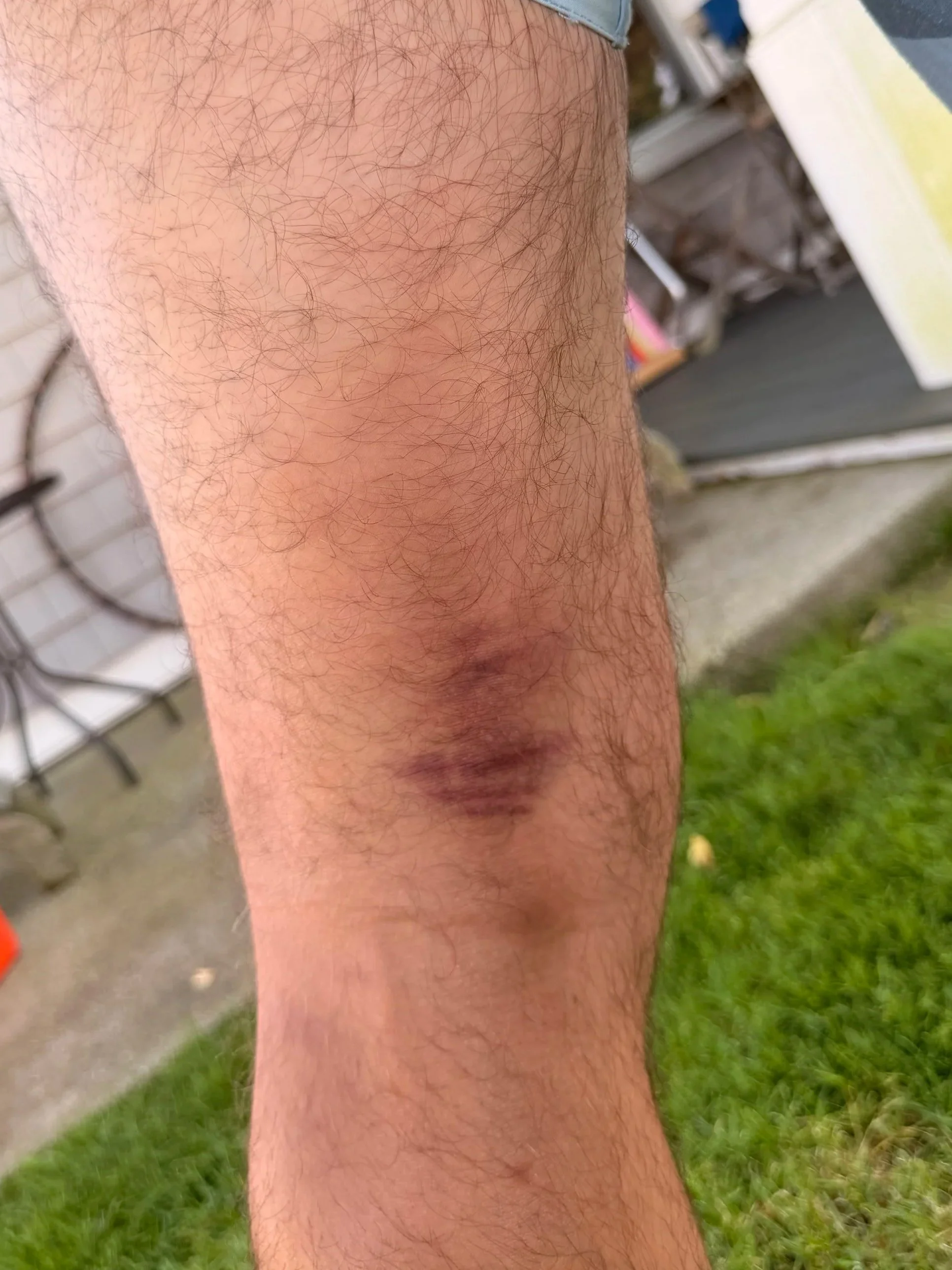
Bruising 3 days after the tear of the left medial (inner) hamstring
One activity I did that maybe wasn’t the smartest was throwing rocks and deadlifting heavy rocks to help rebuild the seawall. There was one rock that was particularly heavy that reminded me, I still have a torn hamstring, jackass. But again, I felt like I was regaining mobility and letting pain help guide me. I was occupying my brain by exploring movement and adding controlled load, or stress, where I could. Instead of just focusing on everything I couldn’t do, I was trying to figure out what I could do.
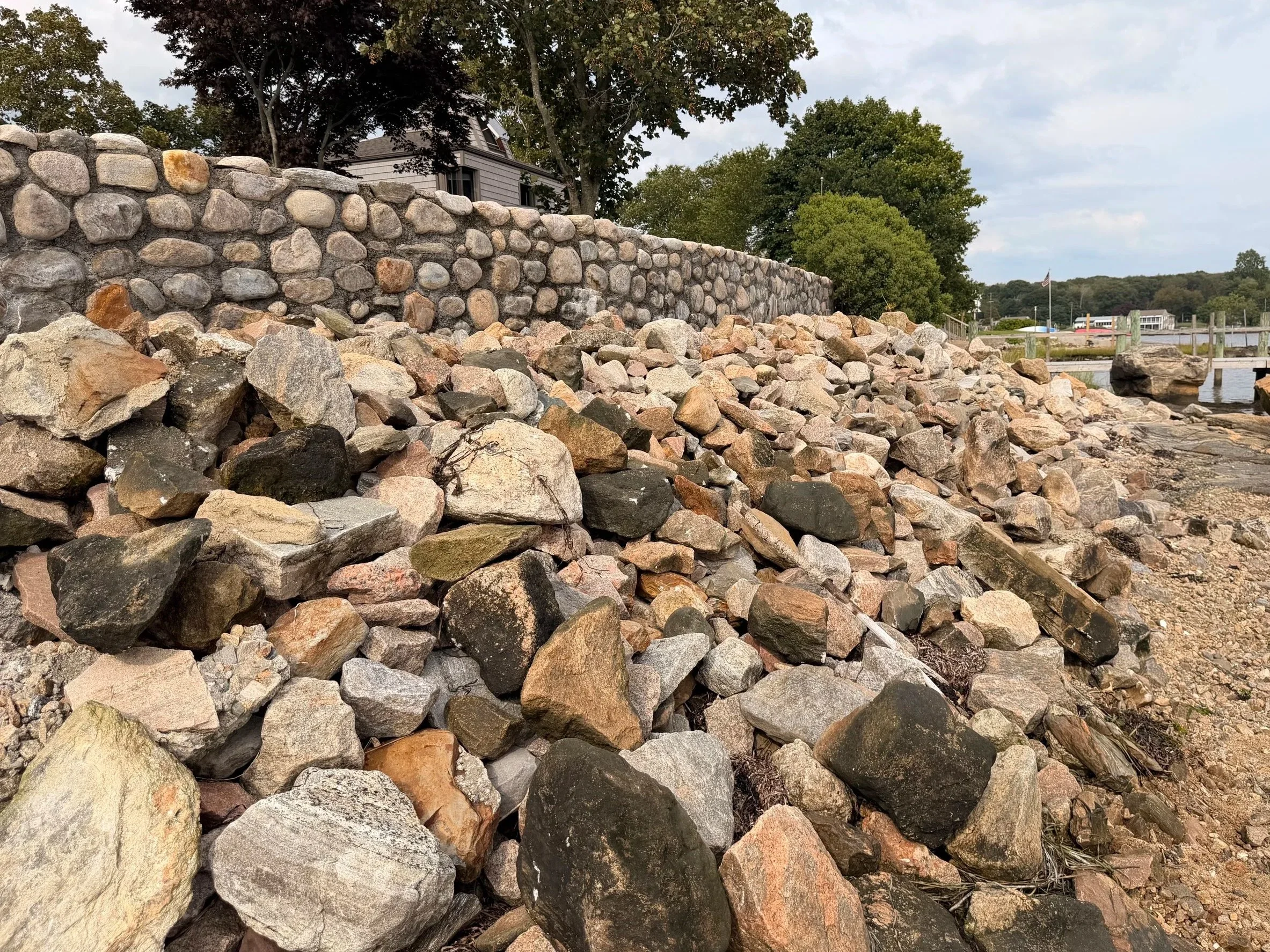
Who needs a gym?
By Day 3, I started doing some light downhill skateboarding with mild carving. I kept it controlled, tested how the hamstring responded, and gradually increased what I was doing as the week went on.
By Day 5, I was paddleboarding standing up with no pain. I was lifting heavier rocks, doing more work, bending forward better, and having very little discomfort. The main thing that still felt achy was sitting in the car for six hours on the drive home. With the breaks we took, though, it felt good to get out and move around. There was mostly stiffness and pain when I first stood up. During the ride, it almost felt like my thigh was wrapped and I was sitting on a pad. I also had some radiating symptoms into the calf for a little while. By the afternoon, no real issues.
On Day 6, I was able to tolerate a light jog, but I could feel that my hamstring still didn’t want to completely let go, so I didn’t push it. I was just testing the waters.
Exactly one week later, I felt ready to return to BJJ—light. But my wife convinced me otherwise, so instead I did a workout with her in the basement at 5:30 AM. I challenged the strain and loaded the hamstring with controlled movements. I embraced some of the discomfort, but I wasn’t pushing through pain or doing anything that caused the pain to increase. I was exploring the pain, seeing what my body would tolerate, and gradually adding stress.
Each day, I felt like I was moving with more purpose and more speed. I was getting more comfortable loading the leg, moving faster, and trusting it again. My plan is still to return to BJJ with some light drilling and gradually work my way back onto the mats fully over the next couple of weeks.
What I Take From It
I tend to treat my own injuries as a learning experience. Partly for myself, but also so I can share that experience with my patients and see whether the things I encourage them to do actually work when I am the one dealing with pain and injury.
Obviously, the degree and mechanism of an injury play a huge role in recovery. But I also think your relationship with your body, your pain, your injuries, and your previous experiences helps shape your recovery.
I have worked with patients who get injured and immediately stop everything. They shut down, limit activity, and stop doing the things they love. Sometimes they even become afraid of certain activities because they have seen or heard about someone else getting hurt doing the same thing.
There are obviously times when an injury needs to be protected and properly evaluated. But I also want my patients to be able to pause, think, reflect, and then move forward. Pay attention to what your body is telling you. Respect the injury. Modify what you need to modify, but don’t automatically assume you have to stop everything.
Find what you can do. Explore movement. Let symptoms guide you. And then gradually build your way back—stronger, smarter, and better prepared.
Update:
The start of week 2 has been good. I’m feeling more limber and getting up the stairs quicker and more comfortably. The bike has been helping, and I’ve been able to use both the SkiErg and rower without any issues.
The biggest challenge so far has been using a stability ball for a single-leg bridge with a hamstring curl. That’s where I really start to notice the weakness, fatigue, discomfort, and difficulty maintaining stability.
A little soft-tissue work and needling should also help with the recovery process as I continue rebuilding capacity and working toward getting back on the mats ASAP.
Update: 2
Back to rolling week 3. Still unable to fully sprint but can run with some tightness. Week 4 - more intense rolling, but still slightly cautious slowing down a bit and trying to think more, which is actually helping my game.