
Manual (Hands-On) Therapy
Additional treatments to support your health.
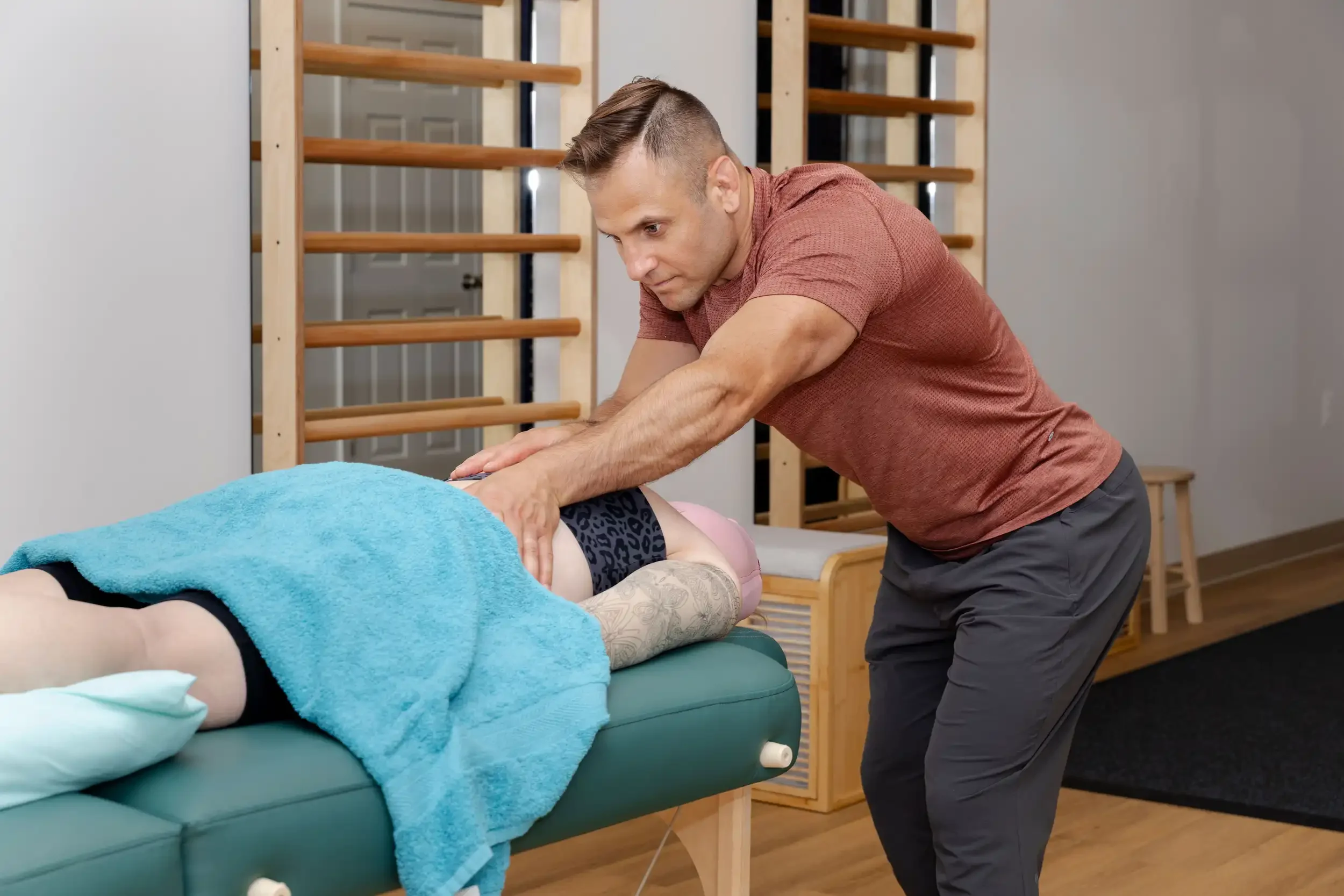
Hands-on care, paired with lasting self-care skills.
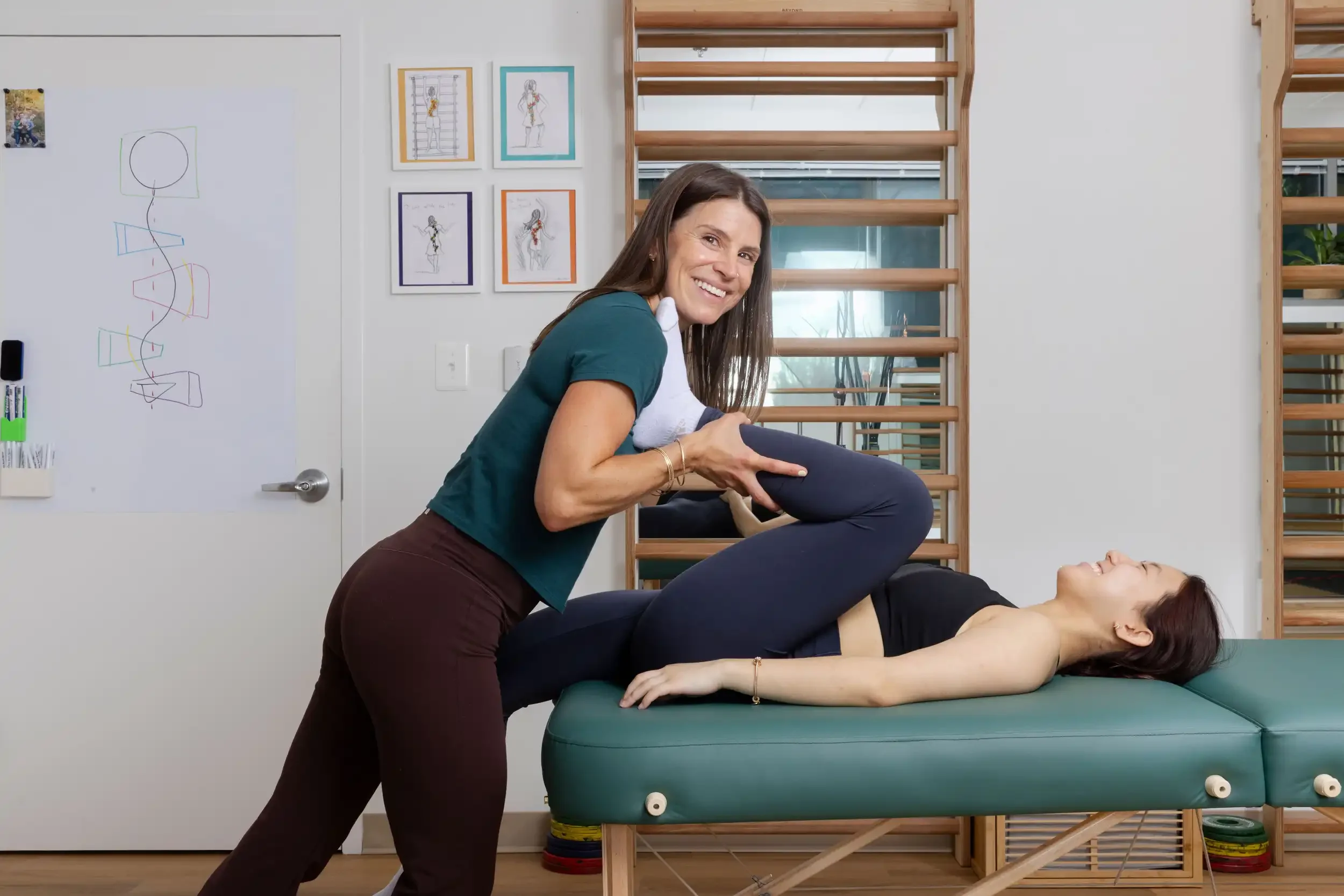
Schroth DC believes that Manual Therapy, a broad term encompassing all types of hands-on therapies, is an essential component of scoliosis and kyphosis care.
We take pride in our ability to blend manual therapy and corrective exercise into each patient’s plan of care. Our therapists’ hands are trained to assess myofascial quality, muscle tone and length, and joint mobility, giving us insight into each patient’s symptom generators and pain patterns. From our assessment, we decide on the spot to massage, stretch, dry-needle, cup, and release any tissue restrictions we feel. This leads to less pain, better tissue mobility, improved muscle recruitment, and increased comfort with exercise.
Equally as important, we teach our patients how to perform these tissue releases themselves at home – this is a powerful component of musculoskeletal care – humans are very capable of “being their own physical therapist” and creating more harmony in their soft tissues. It’s as if, as a species, we’ve forgotten this (or maybe we never knew this in the first place) – we’ve started fully outsourcing our musculoskeletal health to physical therapists, massage therapists, Chiropractors, Rolfers – the list goes on and on.
At Schroth DC, you’ll be introduced to the use of foam rollers, lacrosse and tennis balls, massage sticks, or even your own dexterous hands, to release restricted muscle and fascia – it’s a game changer for symptoms. The key is being strategic about which muscles need releasing and/or stretching – is it the hip flexors, the scapular muscles, the pectorals, the glutes, or even the abdominals? This is where we come in. Our hands have spent years perfecting the art of myofascial assessment. We find deep fulfillment in teaching our patients how to care for their own bodies rather than always relying on a professional. As much as we love working with our patients, we try to “work ourselves out of a job” in this realm.
PLAN YOUR IN-PERSON VISIT
Initial Evaluation (80 minutes): $350
Follow-Up (50 minutes): $285
Advance Purchase for 10 Follow-Ups: $2750
Have Questions? Read FAQs
Need To Talk With Us? Contact Us
Additional Treatments
Complementary treatments can help reduce pain, improve mobility, and support your scoliosis care.
Myofascial Release
Soft and Deep Tissue Mobilization. Hands-on techniques intended to release tightness, trigger points, and restrictions in the muscles and fascia. This technique can be useful for addressing tight musculature and other soft tissues around the curvature, thereby improving the curve’s mobility.
Stretching
A thorough assessment will determine whether shortened muscles in the body are contributing to the patient’s diagnosis. We provide both assisted stretching and instruction on how to properly stretch at home.
Strength & Conditioning
The body can become deconditioned for a variety of reasons: pain, surgery, a sedentary lifestyle, and even wearing a brace. The importance of core, hip, and back strength cannot be overstated for those with scoliosis or spinal diagnoses, especially those who are considering bracing, are currently braced, or have been braced in the past.
Joint Mobilizations
Stiffness in the joints can be addressed by applying graded pressure to the joint surface.
Therapeutic Exercise
In contrast to exercise performed purely for fitness, therapeutic exercise isolates a particular muscle group that is weak or dysfunctional. These will be implemented to complement the Schroth Method.
Dry Needling
Utilizing small, thin needles to both activate dormant muscle tissue as well as release hypertonic (tight) muscles. This can be a great tool for reducing both acute and chronic pain and improving mobility.