
Other Conditions
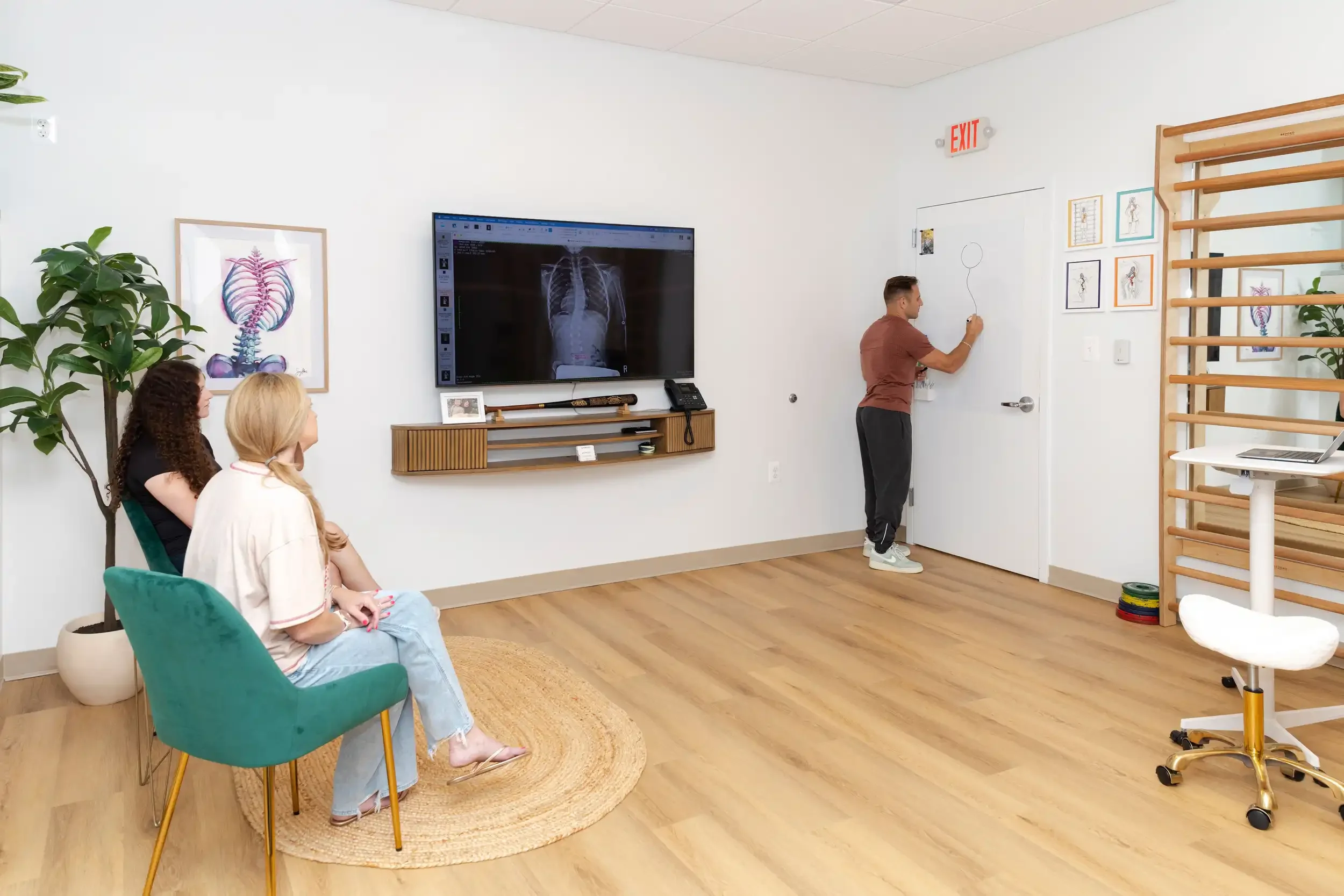
We treat the whole body: neck, shoulders, hips, knees, and feet.
Most patients come to us for scoliosis, but we also treat a wide range of conditions, including neck, shoulder, hip, back, and lower-extremity issues. These can be related to scoliosis or completely separate. Here are other common conditions we treat.
Spine & Posture
Postural Deviations: Forward shoulders, uneven pelvis, or forward head from habits like desk work and screen time. Over time, these lead to musculoskeletal pain.
Spinal Disorders: This includes degenerative disc disease, facet joint arthritis, and spondylolisthesis, which may occur with or without scoliosis.
Neck & Shoulder
Neck Pain: Aches and pain that occur around the neck and head. The neck supports the head but has less bony protection, making it prone to strain, arthritis, and disc issues.
Forward Head Posture: Also called “tech neck,” this happens when the head moves forward from prolonged screen time, straining the neck and upper back.
Rotator Cuff Injury: Tears in the group of four shoulder muscles and tendons are a leading cause of shoulder pain.Difficulty reaching overhead or pain with overhead movements, or sometimes just with sitting.
Shoulder Impingement: Pain from the shoulder blade pressing on rotator cuff tendons when lifting the arm overhead or tightness between the shoulder blades.
Hip & Pelvis
SI Joint Injury: The sacroiliac joint links the spine to the pelvis. Too much or too little movement can cause back, buttock, or hip pain—often after pregnancy, leg-length differences, or lumbar surgery.
Hip Labral Tears: Damage to the hip’s cartilage ring, usually from joint impingement or repetitive movement. Pain in the lower back and hip area sometimes radiating down the leg.
Hip Impingement: A pinching feeling in the front of the hip that happens when the joint does not move as smoothly as it should. It can cause pain and stiffness in the front of the hip and groin, especially with sitting, squatting, bending, or sports.
Hypermobility Syndromes: Joints move beyond their normal range, affecting stability and spinal alignment. This is common in our patients—read more about hypermobility.
Joint Replacement: Physical therapy before and after hip, knee, or shoulder replacement restores strength, motion, and confidence.
Back Pain & Nerve-Related Conditions
Cervical Stenosis: Spinal canal narrowing in the neck can compress nerves, causing pain, numbness, or arm weakness.
Lumbar Stenosis: Lower back canal narrowing, common after age 50, often causes leg pain or numbness that improves with sitting.
Herniated/Bulging Disc: When spinal cushioning pushes out and irritates nerves, causing back and radiating leg pain.
Back Pain: General low back pain.
Foot, Ankle & Sports Injuries
Ankle Sprains: Ligament stretches or tears in the ankle.
Achilles Tendinopathy: Overuse injury to the tendon connecting the calf to the heel, usually from gradual repetitive stress.
Balance Issues: Difficulty feeling steady during standing or movement, which can increase the risk of falls and make walking, climbing stairs, and exercising feel less secure.
Plantar Fasciitis: Inflammation of the tissue along the foot’s bottom, causing sharp heel pain with first steps in the morning.
Sports Injuries: From sprains to overuse, physical therapy aids recovery and prevention.
PLAN YOUR IN-PERSON VISIT
Initial Evaluation (80 minutes): $350
Follow-Up (50 minutes): $285
Advance Purchase for 10 Follow-Ups: $2750
Have Questions? Read FAQs
Need To Talk With Us? Contact Us